2026-11-19 · David
Tree Related Roof Damage Common In Jacksonville Yards
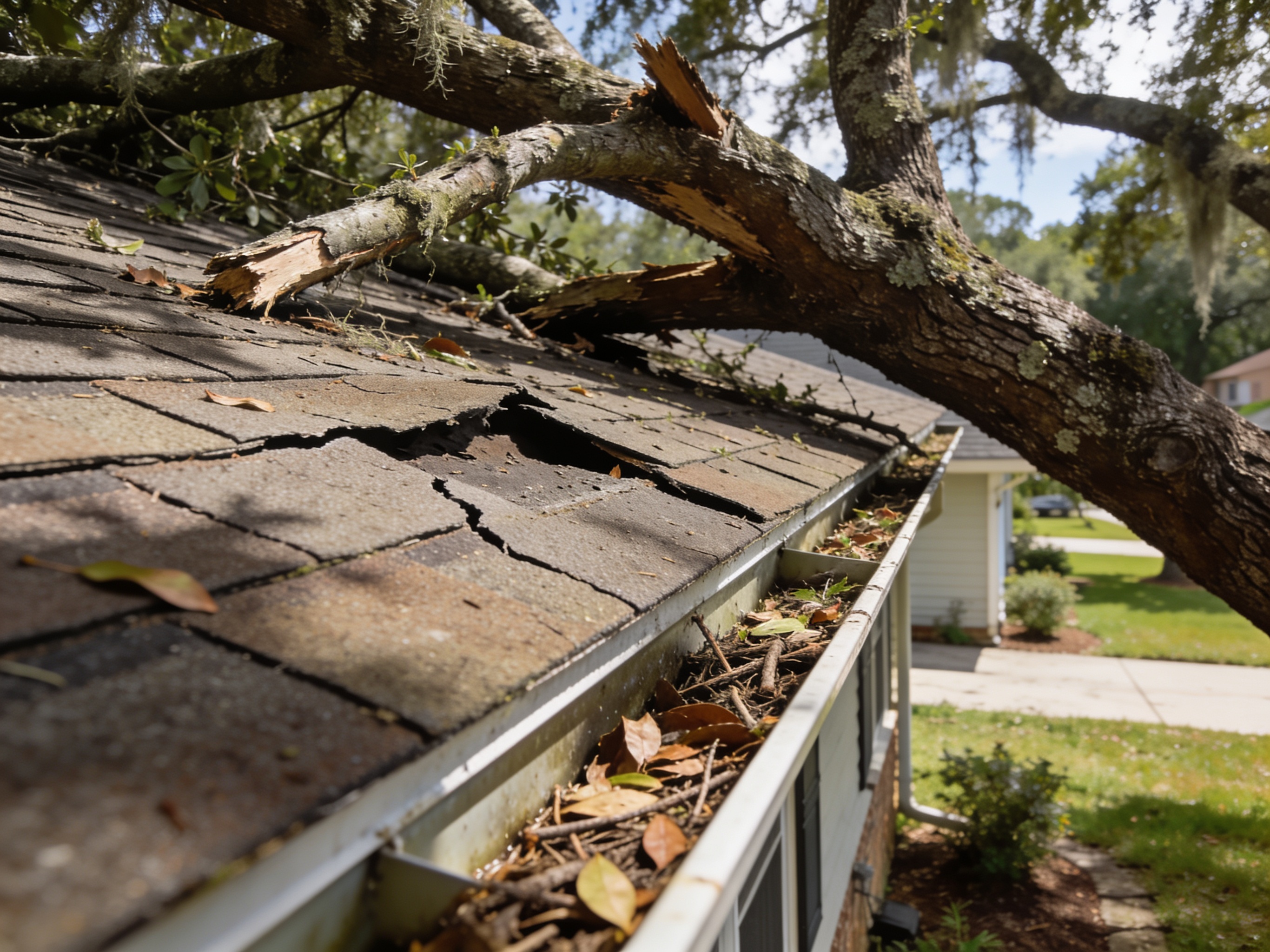
Tree related roof damage occurs often in Jacksonville yards where mature live oaks and water oaks drop limbs onto asphalt shingles and tile during the humid subtropical summers and occasional high winds. Homes in neighborhoods like Riverside, San Marco, and Mandarin built before the 1990s sit under canopies that have grown for decades, increasing contact points with roof edges and valleys. Duval County soil stays moist year-round, which encourages rapid root growth that can lift older foundations and shift roof planes slightly over time.
Live Oaks and Pines Common in Jacksonville Yards
Live oaks line many streets in Avondale and Springfield, dropping acorns and small branches that accumulate in gutters and create moisture pockets along fascia boards. Water oaks grow faster in the mild winters and drop larger limbs without warning during afternoon thunderstorms that roll through Arlington and Mandarin. These species reach 60 to 80 feet in Duval County yards, placing heavy branches directly over roof peaks on single-story homes common in the area. Homeowners notice punctures near ridge lines after even moderate wind events because the wood remains dense and heavy when it falls. Checking branches after each storm prevents small punctures from turning into interior leaks during the next heavy rain.
Storm Patterns That Increase Limb Drops
Hot humid summers bring frequent thunderstorms that saturate the soil around tree roots, loosening their hold before gusts arrive. Mild winters allow trees to retain leaves longer, adding sail area that catches wind and twists limbs against roof surfaces in Downtown Jacksonville and along the St. Johns River. When these storms hit, branches often strike near valleys and around chimneys where older homes in San Marco have limited flashing. The pattern repeats several times each season, making regular visual checks from the ground a practical habit for residents in Orange Park and Atlantic Beach as well. Linking storm timing to tree inspections helps catch damage before it spreads under the shingles.
Signs of Tree Damage on Local Roofs
Granule loss in gutters often signals repeated small impacts from acorns or twigs that homeowners in Riverside yards overlook until leaks appear. Sagging sections near the eaves can trace back to root pressure shifting the structure slightly on older lots in Springfield. Dark streaks running down from branch contact points indicate trapped moisture that accelerates shingle wear in the constant humidity. Walking the perimeter after heavy rain reveals these patterns more clearly than during dry periods. When damage shows in multiple spots, scheduling a professional roof inspection clarifies whether the issue stays limited to surface repair or requires broader attention.
Steps to Reduce Future Tree Related Issues
Trimming branches that hang within six feet of the roof line reduces direct contact and limb drop risk on homes throughout Mandarin and Arlington. Installing gutter guards helps keep acorn debris from clogging drains during peak leaf drop in late fall. Monitoring soil moisture around large trees near the foundation prevents uneven settling that can tilt roof planes over several seasons. Homeowners who combine these steps with an annual check see fewer emergency calls after summer storms. When limb damage does occur, prompt roof repair stops water from reaching the decking beneath the shingles.
When to Call for Assessment After a Fall
After any storm that brings winds over 30 mph, scan the roof from a ladder or with binoculars for new dents or displaced shingles before the next rain arrives. If multiple branches landed across the yard, the impact may have stressed flashing around skylights or vents that sit under the canopy. Residents in Avondale and San Marco often notice interior ceiling spots only after several days of humid weather following the event. A targeted inspection at that point determines whether the repair stays minor or involves decking replacement. Connecting these checks to seasonal patterns keeps roof performance steady through Duval County winters and into the next storm season.