2026-11-19 · David
What Affects Gutter Performance During Jacksonville Rain Events
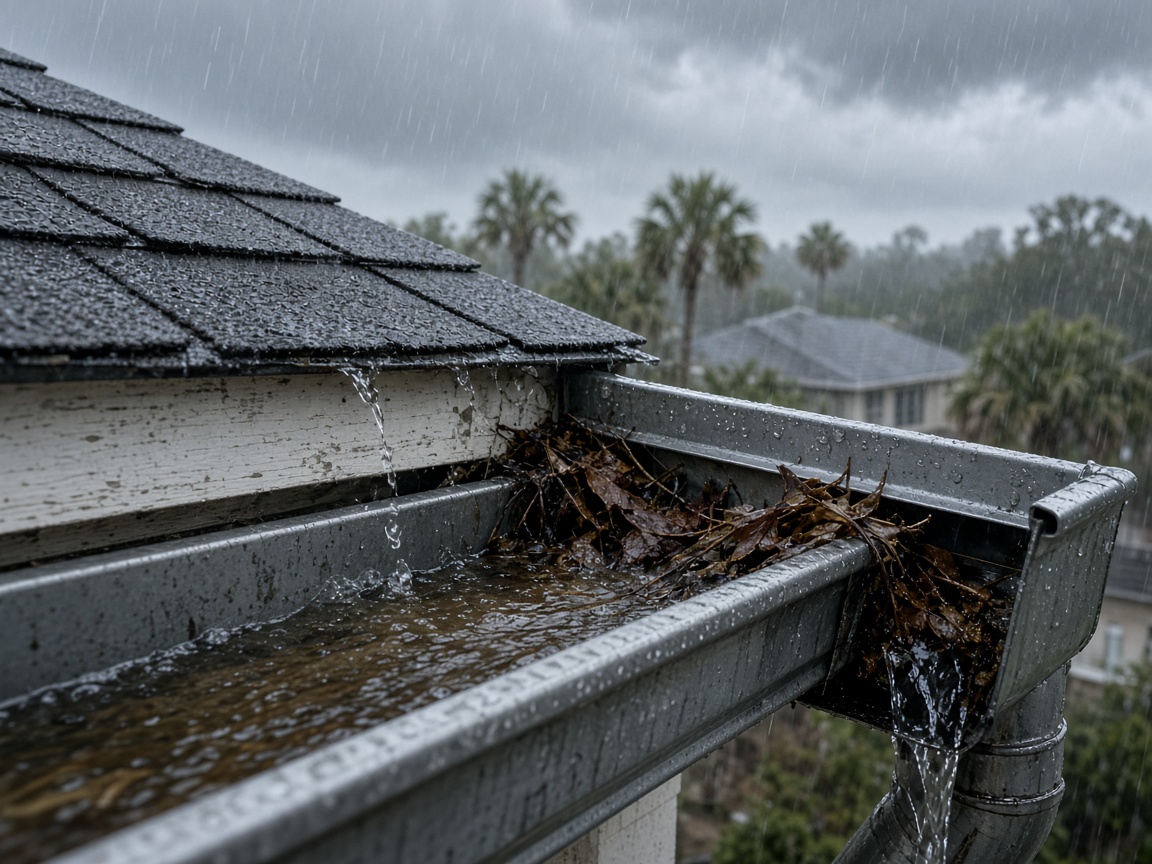
Jacksonville rain events often deliver 2–4 inches per hour during summer thunderstorms, and gutters sized below 5 inches commonly overflow when debris buildup exceeds 30 percent capacity in neighborhoods from Riverside to Mandarin.
Rainfall Intensity and Seasonal Patterns
Duval County's humid subtropical climate produces frequent afternoon thunderstorms from June through September that drop large volumes quickly. These events differ from the milder winter rains, which rarely exceed 1 inch per hour and allow more time for drainage. Homes near the St. Johns River in Downtown Jacksonville and San Marco experience added sheet flow from surrounding pavement, increasing the load on downspouts. Undersized or poorly pitched gutters fail first at valley intersections where water converges from multiple roof planes. Local roof slopes on 1960s–1980s housing stock in Arlington and Avondale often direct water faster than standard 2x3 downspouts can handle, leading to fascia saturation within minutes of peak intensity.
Debris Sources Unique to Jacksonville Neighborhoods
Live oak and magnolia trees common in Springfield and Avondale drop leaves and pollen that mix with windblown pine needles to form dense clogs within weeks of a storm. Pollen layers from spring blooms create a sticky base that traps smaller particles, reducing flow capacity by half in older half-round gutters still found on many Riverside homes. Properties closer to Kingsley Plantation and Mandarin's wooded lots see higher acorn and twig loads that wedge at elbows and strainers. Salt air from Atlantic Beach and Neptune Beach accelerates corrosion on metal gutters, creating rough surfaces that catch debris more readily than inland installations. Regular removal of this organic matter before hurricane season prevents the backups that send water behind fascia boards.
Wind Loads and Coastal Exposure Effects
Tropical storm winds reaching 40–60 mph along the St. Johns River corridor can lift unsecured gutter sections or drive rain under the lip, bypassing the trough entirely. Homes in Springfield and near EverBank Field face amplified gusts funneled between buildings, stressing hangers installed more than 24 inches apart. Coastal properties in Atlantic Beach and Neptune Beach also contend with salt spray that weakens seams over time, allowing joints to separate during sustained winds. These forces combine with heavy rain to create lateral pressure that standard residential gutters were never engineered to resist without additional bracing.
Sizing, Pitch, and Installation Realities
Standard 5-inch K-style gutters handle most Jacksonville storms when pitched at 1/4 inch per 10 feet and paired with 2x3 or larger downspouts spaced no more than 20 feet apart. Many pre-1980 homes in San Marco still use 4-inch systems that reach capacity during the 3-inch-per-hour events recorded multiple times each summer. Proper expansion joints prevent buckling when daytime highs near 95 degrees cause metal to expand, a common issue on south-facing runs in Mandarin. Installation that accounts for the county's mild winters but intense summer UV exposure uses heavier gauge material to resist sagging between hangers.
Practical Maintenance Timing for Local Conditions
Inspect and clear gutters after each major storm and again in late spring before pollen peaks. Check for separated seams and loose hangers while on the ladder, especially on the north sides of homes in Orange Park where shade keeps surfaces damp longer. Homeowners in Arlington and Avondale benefit from adding leaf guards only after confirming 5-inch troughs and adequate downspout capacity, since guards can reduce effective opening size. For storm-related gutter or fascia issues, review Gutter & Fascia Services. After heavy summer rains, follow guidance in How To Check For Roof Leaks After Heavy Summer Storms to spot overflow damage early. Coastal homes should also examine Dealing With Salt Air Corrosion On Coastal Roofs for related material concerns.